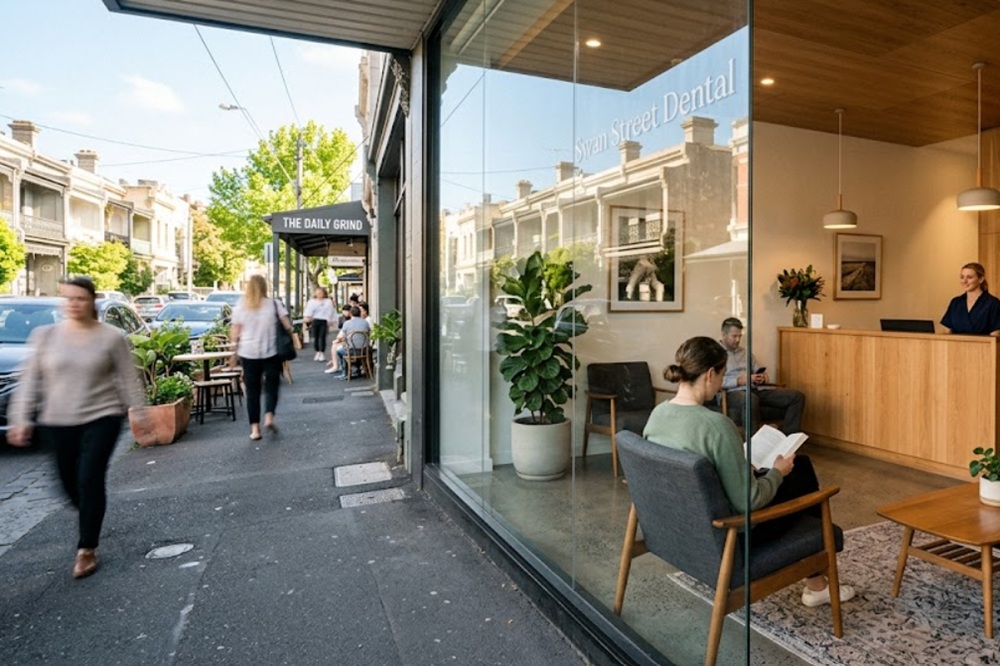
Why More Melbourne Locals Are Skipping the CBD for Their Dentist
Parking alone should be enough to put anyone off. A two-hour meter, a $20 Wilson lot, or a brisk 12-minute walk from Flinders Lane to a dental chair is a commitment most people quietly resent — and, apparently, are increasingly opting out of.
Something has shifted in how Melbourne residents choose their dentist. For years, proximity to the office drove the decision. Your dentist was wherever you worked, squeezed into a lunch break between a chicken wrap and a 2pm meeting. The CBD was convenient by default. But default has a way of eroding when the alternatives get good enough — and the alternatives have got very good.
The Inner Suburbs Caught Up
Practices in Richmond, Fitzroy, Collingwood, and South Yarra have spent the last decade investing in the kind of technology and expertise that used to require a city postcode to access. Cone beam CT scanners. Digital impressions. Cosmetic dentistry that competes with anything on Collins Street. There’s no longer a meaningful gap in capability — and in some cases, the suburban practices have pulled ahead, precisely because they’re not paying CBD rent.
Lower overheads don’t always translate to lower prices, but they do tend to translate to better equipment, more time per patient, and a waiting room that doesn’t feel like a corporate reception. Patients notice.
The Appointment Experience Is Different
A CBD dental practice has a particular rhythm to it. Appointments are slotted tightly. The dentist is good, but they are also running on a schedule that doesn’t leave much room for a nervous patient to take a breath. It’s efficient. Efficiency is not always what someone needs when they haven’t visited a dentist in four years and are already anxious before they’ve sat down.
Inner suburb practices — particularly those that have built their reputation on word of mouth and Google reviews rather than foot traffic from office workers — tend to run differently. The incentive to retain a patient long-term changes the dynamic. You’re not anonymous. Someone will actually remember your name.
The Review Culture Has Done Something Interesting
A practice in the CBD can survive on volume. It doesn’t need every patient to love it, just enough to keep the chairs full. A practice on Swan Street or Brunswick Street lives or dies by its reputation in a more concentrated way. When a dentist in Richmond has 388 reviews at 4.9 stars, that’s not marketing copy — that’s a community of people who told their friends and then went back to Google to confirm it.
Honestly? The review ecosystem has probably done more for suburban dental practices than any advertising ever could. It made the intangible stuff — warmth, communication, how the dentist explains things — suddenly legible and searchable. And suburban practices, where those qualities tend to run higher, have benefited disproportionately.
What This Means For You
If you haven’t revisited your choice of dentist since you last changed jobs, it might be worth reconsidering whether CBD proximity is still doing any work for you. The best practices in Melbourne’s inner suburbs now offer everything the city does — and a few things it doesn’t. Weekend availability at some. On-the-spot health fund claims via HICAPS. Payment plans that make higher-cost treatments accessible without the stress of a single large bill.
The commute argument that once made city dentists the default has quietly collapsed. The train stops at Richmond too.